On March 27th, 2026, Xanadu began trading on Nasdaq and the Toronto Stock Exchange under the ticker symbol XNDU, becoming the first company in Creative Destruction Lab (CDL)’s 13-year history to go public. The listing came almost a decade after founder and CEO Christian Weedbrook took the company through CDL’s program, and for the mentors who were in the room, the milestone was the result of a very long, very deliberate journey.
Xanadu was founded on a conviction that photonic quantum computing, which uses particles of light, or photons, rather than conventional electronic circuits – offered the most viable path to scalable, fault-tolerant quantum computers. At a time when most attention in the field was on superconducting hardware, that was a contrarian bet. Turning it into a company required more than scientific confidence.
CDL Mentor Barney Pell, angel investor and entrepreneur, recalls that Weedbrook came into the program with both the technical depth and the clarity of conviction that made him worth backing. “Christian was deeply knowledgeable about his approach to quantum computing, where the photonic approach had many potential benefits,” Pell recalls. “Most importantly, this had the ability to scale using existing principles of photonic manufacturing.”
Xanadu joined CDL-Toronto’s 2016/17 AI cohort – a nine-month, objectives-based program for massively scalable science- and technology-based ventures. The following year, CDL Quantum would launch to support quantum-focused founders.
One of the program’s first contributions was sharpening the market focus. Weedbrook arrived at CDL with the possibility of miniaturizing photonic quantum computers to the point of mobile deployment, a uniquely photonic possibility, but one that would require many additional iterations to bring down size and cost. Pell pushed back directly, recalling that he said “I don’t care if your initial quantum computer is the size of a football field — customers will access it in the cloud and this alone will change the world and be a great business.” Weedbrook took the advice, and cloud-based access through large data centres became the foundational commercial approach for the company.
“Looking back, CDL was one of the first places where I was treated as a founder, not just a researcher. That shift in identity matters more than people realize. I was asked questions that my academic peers would never think to ask. That was uncomfortable at first, and that mindset stayed with me for years and is a part of how Xanadu got here,” says Christian Weedbrook, Founder and CEO of Xanadu.
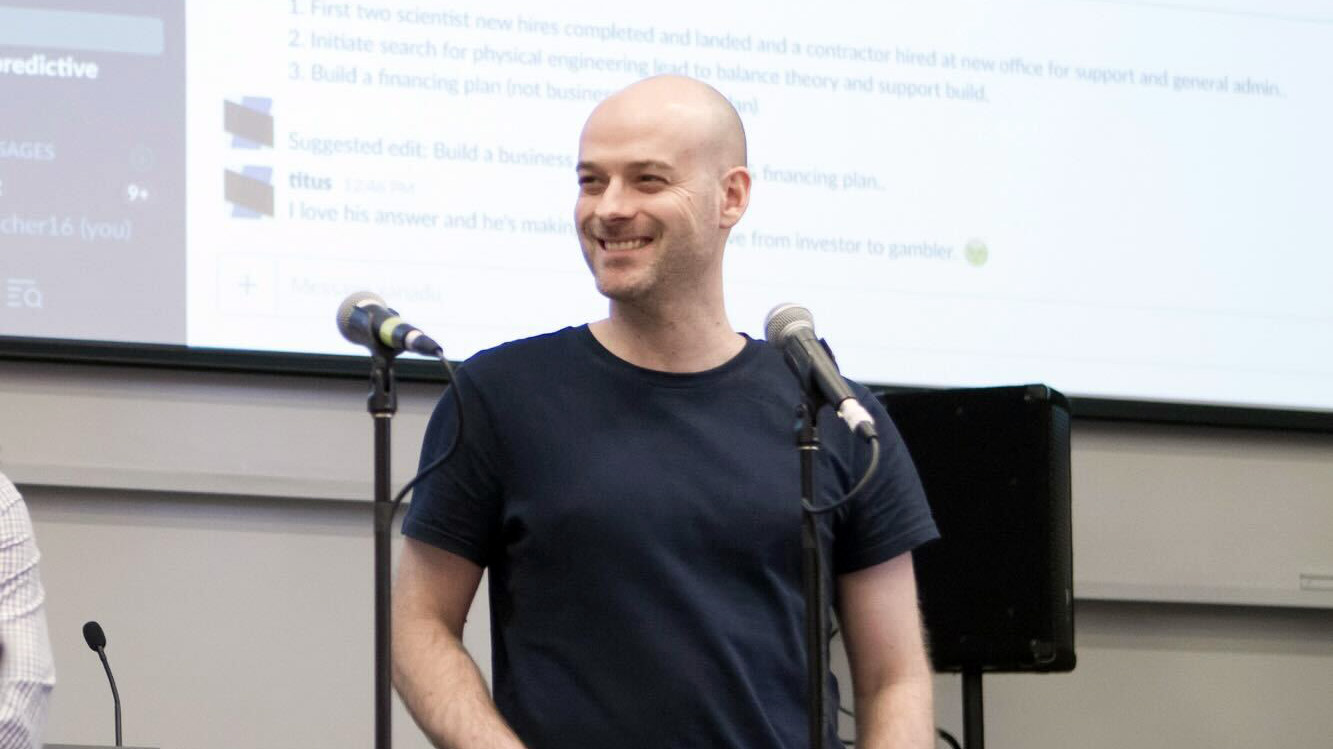
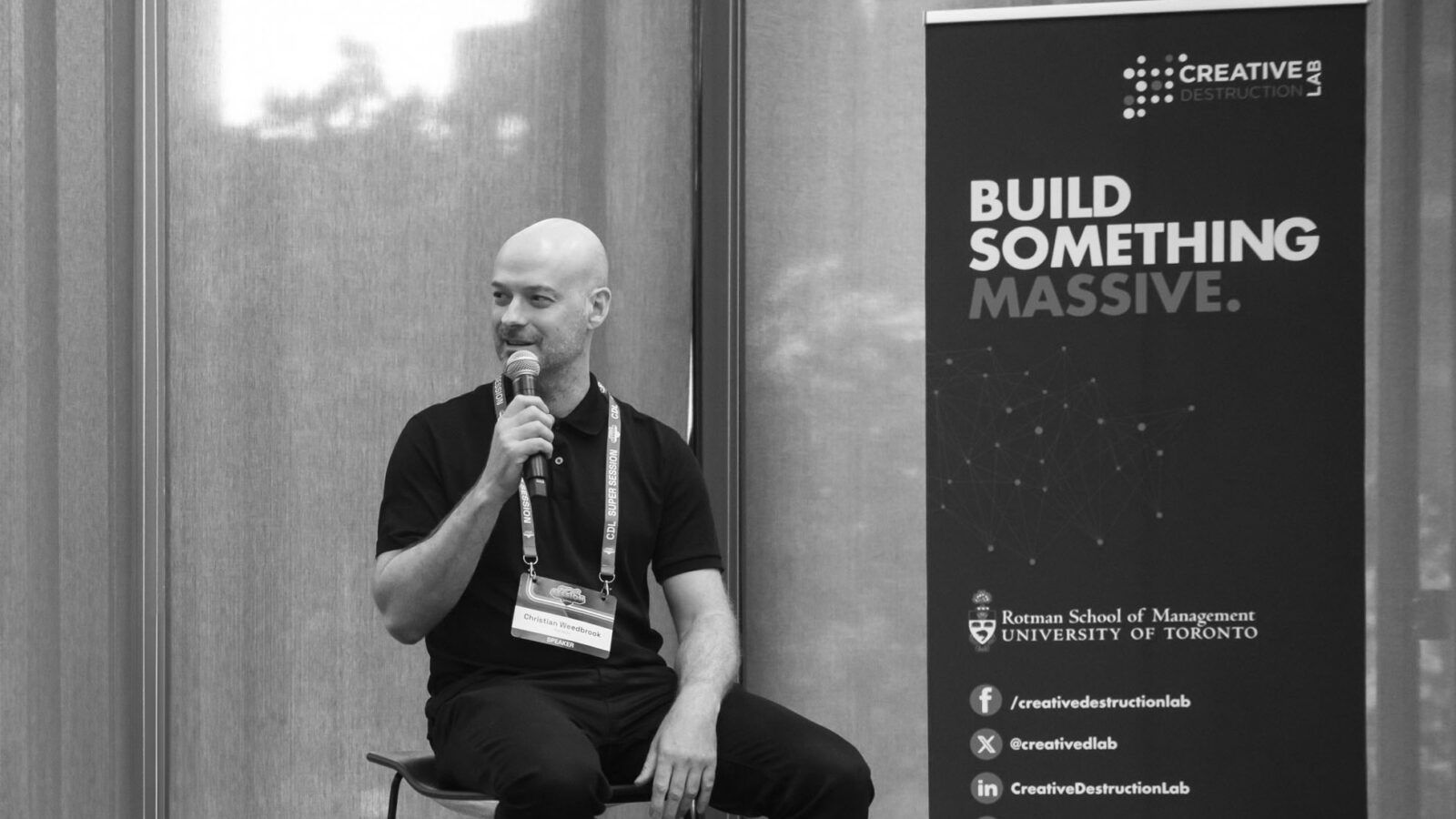
CDL-Toronto Session #4 – April 6, 2017
Ken Nickerson, Founder of iBinary and a CDL Mentor who had previously met Weedbrook and encouraged him to apply to CDL, saw that kind of focus as central to what made Xanadu different from other quantum teams. Nickerson recalls that Weedbrook had previously been working on a different venture that was interesting “primarily because of the founder, not the technology.” Xanadu was different. “Xanadu was interesting because it was a hard problem — quantum computing, but Christian had a solution to the hard problem of quantum’s ‘last mile,'” Nickerson recalls. “In the entire quantum space at that time, only Xanadu had thought about deployment. How do you put a quantum computer, at scale, into a standard 19-inch rack? That was unique. Being photonic made it possible.”
The CDL Sessions also played a role in testing the underlying science. At the time, achieving the level of light squeezing, a technical measure of how precisely photons can be manipulated to support quantum entanglement required to make Xanadu’s architecture viable, was an open question. Nickerson had spoken with domain experts during due diligence, and their assessment of Xanadu’s targets was skeptical. “CDL’s greatest contribution to any frontier technology is its ability to challenge assumptions without dismissing the idea,” Nickerson said. “CDL accepted that the Xanadu path was ambitious, but the mentors, peer groups, and CDL proper offered encouragement, mentoring, funding, and support to do the impossible.” Over the decade that followed, Xanadu achieved those targets.
Dennis Bennie, Founder and Principal of XDL Capital Group, recalls that the CDL community also brought meaningful early conviction through its network. Haig Farris, founder of D-Wave, helped catalyze interest among CDL Mentors at a critical early stage — an example of the program’s ecosystem functioning as designed. For Bennie, Weedbrook himself was a large part of why the company attracted that support. “Christian was an ideal fit for CDL: relentless focus, the grit to take on a hard problem, and a genuine warmth that drew people in,” said Bennie.
In the years that followed CDL, Xanadu scaled its open-source quantum machine learning library, PennyLane, into one of the most widely used platforms in the field — with hardware manufacturers beyond Xanadu building on top of it. The company secured partnerships with major technology and research institutions, raised successive financing rounds, and published peer-reviewed results that kept it at the frontier of photonic quantum computing. The XNDU listing on March 27th was the outcome of that decade of work.
For Pell, who made a personal investment in Xanadu as part of the company’s first funding round, the IPO carried particular weight. “I gave so much energy at CDL to these super early-stage ideas, hoping we could shape and empower some of them to become world-changing ventures,” Pell said. “Seeing one of them go public 13 years after CDL started, and ten years after we helped the founder start the company, shows these good things are worth the wait. It also validates our hypothesis that we can create something massive through this community and structure.”
Bennie echoed the broader significance for Canadian deep tech. “It’s deeply satisfying to see Xanadu’s success validate the many years of hard work to build CDL,” he said. “World-class deep tech can be founded, financed, and scaled in Canada!”
Ajay Agrawal, founder of CDL, placed the milestone in the context of what the program was built to do. “Xanadu is exactly the kind of company CDL was built for: our mission is to enhance the commercialization of science for the betterment of humankind. This technology will unlock solutions to a range of problems that will benefit humanity. Watching Xanadu reach the public markets ten years after graduating CDL is a proud moment for everyone who was part of that journey.”